
Barz casino Plinko
Introduction
Plinko looks almost too simple to deserve a long explanation. A ball drops from the top of the board, hits rows of pegs, changes direction again and again, and eventually lands in a slot with a multiplier. That is the whole visual idea. Yet in practice, Barz casino Plinko creates a very specific kind of session that feels different from slots, roulette, crash games guide, or live tables. I have spent enough time studying this format to say that its simplicity is exactly what makes it easy to underestimate.
For players in the United Kingdom, the appeal is easy to understand. The interface is clean, the round resolves quickly, and the game gives immediate control over stake size, board setup, and risk level. There is no need to learn paylines, detailed Barz Casino bonus information before making a deposit symbols, side bets, or strategy charts. At the same time, Plinko is not as straightforward as it first appears. Behind the minimal design sits a distribution model where most results cluster around the middle, while the eye is naturally drawn to the rare high multipliers at the edges.
That gap between what the game looks like and how it actually behaves is the key to understanding Plinko. On the surface, it is one of the easiest casino games to start. In reality, the experience can shift dramatically depending on the chosen risk setting, the number of rows, and the player’s expectations. This is why a proper Barz casino Plinko review should focus less on presentation and more on rhythm, variance, and what the game truly offers over a real session.
What Plinko is and why it attracts so much attention
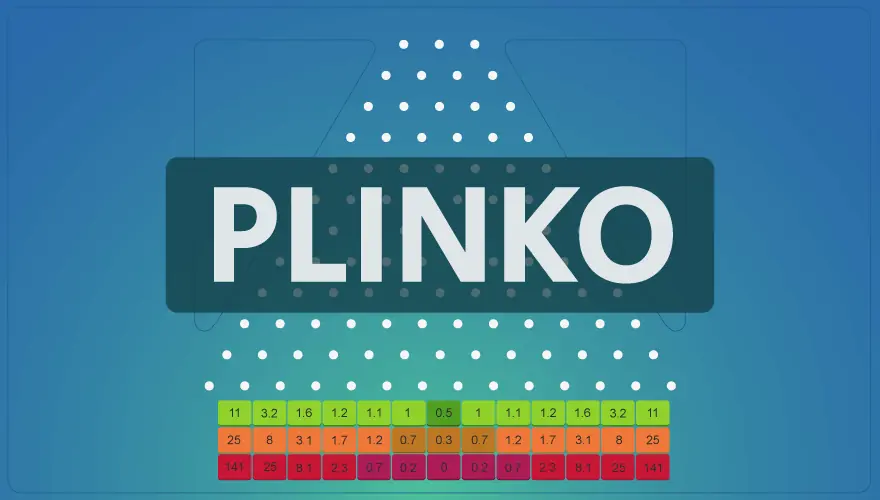
Plinko is a chance-based game built around a vertical board filled with pegs. The player drops a ball from the top, and each collision sends it left or right until it reaches one of the payout slots at the bottom. Every slot carries a multiplier, and the final return depends entirely on where the ball lands. That core loop is easy to grasp in seconds, which is one reason the format has become so visible on modern gaming platforms.
But clarity is only part of the story. The stronger reason for its visibility is that Plinko turns randomness into something players can watch unfold. In many other casino games, the result appears almost instantly: reels stop, a number lands, a hand is dealt. Here, the outcome is revealed through motion. The ball bounces, hesitates, and drifts in a way that creates suspense even though the underlying result is still governed by probability. It is a small detail, but it changes how the session feels.
Another reason Plinko stands out is that it gives players a visible sense of configuration. Even before a round starts, the player often chooses a stake, a board size, and a risk level. That creates an impression of shaping the experience rather than simply pressing spin. It does not eliminate randomness, of course, but it changes the psychology of the session. In slots, the volatility is usually hidden inside the paytable and bonus design. In Plinko, the risk profile is much more exposed. If bonuses are what you care about, play Aviator online at Barz Casino breaks down every offer currently running.
The board looks almost playful, but a high-risk setup can produce a session with long stretches of modest returns punctuated by rare spikes. One of the most memorable things about Plinko is this: it often feels calmer than it really is. That contrast is exactly why the game gets attention. It is accessible on entry, but not necessarily gentle in practice.
How the Plinko system actually works at Barz casino
At Barz casino, the Plinko page is typically built around a short sequence of decisions. The player sets the wager, selects the risk mode, and in some versions chooses the number of rows. Once the ball is released, it travels downward through the peg grid until it lands in a payout bucket. The stake is then multiplied by the displayed value of that bucket.
The movement itself appears organic, but the logic is based on repeated binary deflections. At each peg, the ball is effectively redirected left or right. Over many rounds, this creates a distribution where central slots are reached more often than the extreme outer slots. That is why the biggest multipliers are usually placed at the edges: they are harder to hit and therefore less frequent.
This matters because the visual board can mislead inexperienced players. A newcomer may see several high multipliers on the layout and assume the game offers many strong outcomes. In truth, the structure is weighted. The centre is common, the extremes are scarce, and the expected pattern of results is shaped accordingly.
| Element | What it does | What it means in practice |
|---|---|---|
| Stake size | Sets the cost of each ball drop | Directly affects session length and bankroll pressure |
| Risk level | Changes multiplier spread across the board | Higher risk usually means more low-end results and rarer top hits |
| Rows | Adjusts the depth of the board | More rows can increase separation between common and rare landing zones |
| Multiplier slots | Determine the final return | The most attractive values are generally the least likely to be reached |
There is also an important distinction between animation and outcome. The ball’s path is the visible part of the round, but players should not confuse visual drama with influence over the result. Plinko is not a skill game. The drop point may feel meaningful, and the bounce pattern may look readable, but the session remains governed by chance. Treating the board as something that can be “read” too confidently is one of the most common mistakes I see around this format.
Why the game feels engaging and how its pace changes during a session
Plinko has a very particular tempo. Each round is short, but not instant. That small delay creates tension. You are not waiting as long as you would in some complete Barz Casino live casino games review, yet you are not getting the immediate stop-start rhythm of a slot spin either. The ball’s descent acts as a built-in suspense sequence, and that is a major part of the game’s appeal.
In practical terms, the pace depends on three things:
- how quickly the player repeats rounds,
- how the chosen risk level affects emotional swings,
- whether the session is approached casually or with aggressive stake progression.
At low stakes and moderate settings, Plinko can feel almost meditative for a few minutes. The board resets, the ball drops, the result arrives, and the loop continues without much friction. On higher-risk settings, the same structure becomes more intense. Small multipliers appear often, the player waits for a larger hit, and the emotional weight of each near-edge bounce becomes much stronger.
This is where Plinko differs from many games that rely on layered features. It does not build excitement through free spins details, expanding symbols, or bonus rounds. It builds it through anticipation and distribution. The tension comes from knowing that most outcomes will be ordinary while a few are dramatically better. That is a cleaner form of suspense, but also a more transparent one.
A second observation that often gets missed: Plinko can make short sessions feel longer than they are. Because each ball drop has a visible journey, ten rounds can feel more eventful than ten rapid slot spins. For some players, that is a strength. For others, especially those who want features and variety, it may start to feel repetitive sooner than expected.
How risky Plinko really is and who tends to enjoy it most
Plinko should be treated as a variable-intensity chance game. It is not automatically high-risk in every configuration, but it can become quite sharp when the board is set to a more aggressive profile. The important thing is that the player usually has some control over how extreme the distribution becomes. That makes the game more transparent than many slots, where volatility is often known only through provider data or long-term observation.
In broad terms, lower-risk settings compress the payout spread. Returns tend to cluster more tightly, and the game often feels steadier. Higher-risk settings widen the spread. This usually means many more underwhelming outcomes in exchange for the possibility of a large multiplier. The shift can be dramatic.
For that reason, Plinko often suits players who enjoy:
- quick rounds with visible suspense,
- simple controls but meaningful setup choices,
- sessions built around variance rather than bonus features,
- watching probability play out in a clear visual form.
It is less suitable for players who prefer extended feature cycles, narrative presentation, or the layered structure of traditional video slots. It can also frustrate those who chase patterns too aggressively. The board may look readable, but the game does not reward intuition in the way some players hope.
If I had to summarise the player fit in one sentence, it would be this: Plinko works best for people who enjoy clean design and can accept that most of the excitement comes from statistical spread, not from elaborate content.
What players should understand about probabilities and likely outcomes
The most useful way to think about Plinko is not as a hunt for the highest multiplier, but as a game of weighted landing zones. The outer edges carry the headline values precisely because they are less likely. The middle slots are there to absorb a much larger share of outcomes. That balance is the foundation of the format.
In real play, this creates a common misunderstanding. A player sees a board with several attractive numbers and assumes the session has frequent upside. What actually happens is that modest outcomes appear repeatedly, while standout hits arrive irregularly. The game is not hiding this; the layout itself tells the story if you read it correctly.
Before launching Barz casino Plinko, I would keep these practical points in mind:
- The top multiplier is not the reference point. It is the rarest event on the board, not the standard outcome to expect.
- Risk mode changes the feel of the whole session. It is not a cosmetic setting. It can alter how often the game returns low values and how far the rewards are stretched.
- Fast rounds can drain a bankroll quietly. Because the interface is simple, players sometimes underestimate how many drops they make in a short period.
- Short-term results can look deceptive. A brief run of strong landings does not mean the board has become favourable, and a dry stretch does not mean a large hit is due.
The third point is especially important. Plinko does not create the same sensory overload as some slots, so players may feel more in control than they actually are. That calmer presentation can disguise the speed at which balance changes occur, particularly when auto-play or rapid manual drops are involved.
How Plinko differs from slots and other common casino formats
Compared with classic slots, Plinko strips away almost everything except stake, chance, and payout distribution. There are no reels, no paylines, no symbol combinations, and usually no bonus rounds. That makes the game easier to read, but it also means there is less variety inside a single session.
Against Barz Casino roulette help, Plinko offers a more visual and gradual reveal. Roulette resolves in a clean, final way. Plinko resolves through motion, which creates more suspense even when the mathematical uncertainty remains central. Against crash games, Plinko feels less confrontational. Crash asks the player to make a timing decision. Plinko asks for setup choices before the round and then takes control of the result.
It also differs from card-based games because there is no strategic layer in the traditional sense. You are not making optimal decisions hand by hand. The main decisions happen before the drop: stake level, risk profile, and sometimes board depth. After that, the round is passive.
| Game type | Main source of tension | Player involvement | Typical session feel |
|---|---|---|---|
| Plinko | Ball path and landing zone distribution | Setup choices before each round | Fast, visual, variance-driven |
| Slots | Reel outcomes and feature triggers | Low during spins, high in game selection | Feature-led, content-heavy |
| Roulette | Single-number result | Bet selection each round | Direct, structured, table-oriented |
| Crash games | Cash-out timing | Active timing decision | Pressured, reactive, momentum-based |
This comparison helps explain why Plinko divides opinion. Some players love the stripped-back clarity. Others miss the layered entertainment of slots or the decision-making of table games. Neither reaction is wrong. The format is simply more specialised than it first appears.
Where Plinko performs well and where its limits show
The strongest side of Plinko is clarity. I can show the board to a new player and explain the basic loop in less than a minute. That is rare in online casino content, where many products require the player to learn symbols, features, and hidden conditions before they understand what is happening.
The second strength is configurability. Even though the game is simple, risk level and board structure can materially change the session. That gives the player a more visible relationship with variance than many other formats do. You are not guessing whether the game is calm or sharp; you are actively choosing the tone of the session.
The third strength is pacing. Plinko is good at creating tension without becoming cluttered. The ball drop is short, readable, and emotionally effective. It is one of the few modern casino formats where the animation genuinely supports the logic rather than distracting from it.
Its weaker side is repetition. Once the player understands the board, there are not many layers left to discover. If someone needs unlockable features, changing symbols, or evolving bonus structures, Plinko may feel thin after a while.
Another limitation is perception. Because the board is visible, players often feel they are close to understanding a pattern. That can encourage overinterpretation of short streaks. A near miss on an edge multiplier feels meaningful, but in probability terms it may be no more informative than any other miss. Plinko is very good at creating the sensation of “almost,” and that can be psychologically powerful.
That is probably the sharpest observation I can make about the format: Plinko turns distribution into drama. It does this elegantly, but it also means the game can tempt players to read intention into pure randomness.
What to check before starting a session at Barz casino
Before playing Barz casino Plinko, I would focus on a few practical checks rather than rushing straight into high-risk drops.
- Review the multiplier layout. Look at where the strongest values sit and how narrow those landing zones are.
- Choose risk mode deliberately. Do not treat it as a minor preference. It can define whether your session feels steady or swing-heavy.
- Set a stake that matches the speed of the game. Because rounds resolve quickly, even modest overbetting can shorten the session sharply.
- Use demo mode if available. This is one of the few formats where a short test run can genuinely help you understand the rhythm before spending real money.
I would also suggest deciding in advance what you want from the session. If the goal is relaxed entertainment with visible movement and simple controls, lower or medium settings may suit better. If the goal is chasing occasional high multipliers and accepting many plain results in between, a higher-risk setup may fit. The mistake is to expect both experiences at once.
That matters because Plinko is highly sensitive to expectation. Players who approach it as a light visual game may be surprised by how uneven it can become. Players who approach it as a big-hit machine may overlook how often the board funnels results back toward the centre. The best sessions usually happen when the setup matches the player’s actual tolerance for variance.
Final verdict on Barz casino Plinko
Barz casino Plinko offers a clean, probability-driven experience built around visible suspense rather than layered features. Its main strengths are easy entry, transparent configuration, and a pace that keeps each round engaging without becoming complicated. For players who like to see randomness unfold in front of them, it can be a genuinely satisfying format.
At the same time, the game asks for realism. The board may look simple, but the session can behave very differently depending on the chosen risk level. High multipliers are there to create upside, not to define the average round. Most outcomes tend to gather away from those headline values, and that is something every player should understand before starting.
In practical terms, Plinko is best for players who enjoy quick decisions, visible motion, and a straightforward relationship with variance. It is less convincing for those who want story, features, or deeper interaction. That is not a flaw so much as a boundary of the format.
If I had to sum it up plainly, I would say this: Barz casino Plinko is worth trying if you want a minimalist casino game with clear tension and flexible risk settings, but it deserves the same caution as any fast, variance-led product. The interface is simple. The experience is not always simple. That is exactly why some players will keep coming back to it, while others will quickly realise they would rather play something built around features instead of distribution.
FAQ
What does Plinko gameplay involve when the ball drops?
A ball drops through numbered rows and lands in an outcome zone. The zone determines the multiplier or score used for the result.
What is the difference between demo mode and real-money play for Plinko?
Demo mode uses play-money so the session does not affect the balance. Real-money play uses actual stakes and outcomes. Options like stake size and risk feel the same, but the results reflect the configured real-money return.
Which multiplier effects should players understand before betting in Plinko?
Multipliers apply to the amount staked on the round. If the ball lands on a lower zone, the payout will be smaller; landing on a higher zone can significantly increase the result. Outcomes are resolved each round independently.
Can Plinko be played on a mobile phone without installing an app?
Yes, mobile web access is supported. The game is designed for touch controls and fits smaller screens.
What should be checked if the Plinko game does not launch from the game page?
Confirm the browser or device supports the required game features and that pop-ups or game scripts are allowed. Refresh the page and try launching again from the lobby. If an account login is required for real-money play, sign in first.
Is live casino required for Plinko, or is it part of regular casino games?
Plinko is offered as an online casino game, not a live dealer table. The gameplay resolves instantly after the ball drop rather than through a live dealer session.
What happens if a player refreshes the screen mid-round in Plinko?
Refreshing may interrupt the current round. The next round should be started again from the lobby once the game is fully loaded.
What common mistake should new players avoid with multipliers in Plinko?
Avoid assuming multipliers mean a guaranteed outcome in the next round. Each ball drop is an independent event, so results can vary widely. Starting with a modest stake helps players get a feel for how often different zones hit.